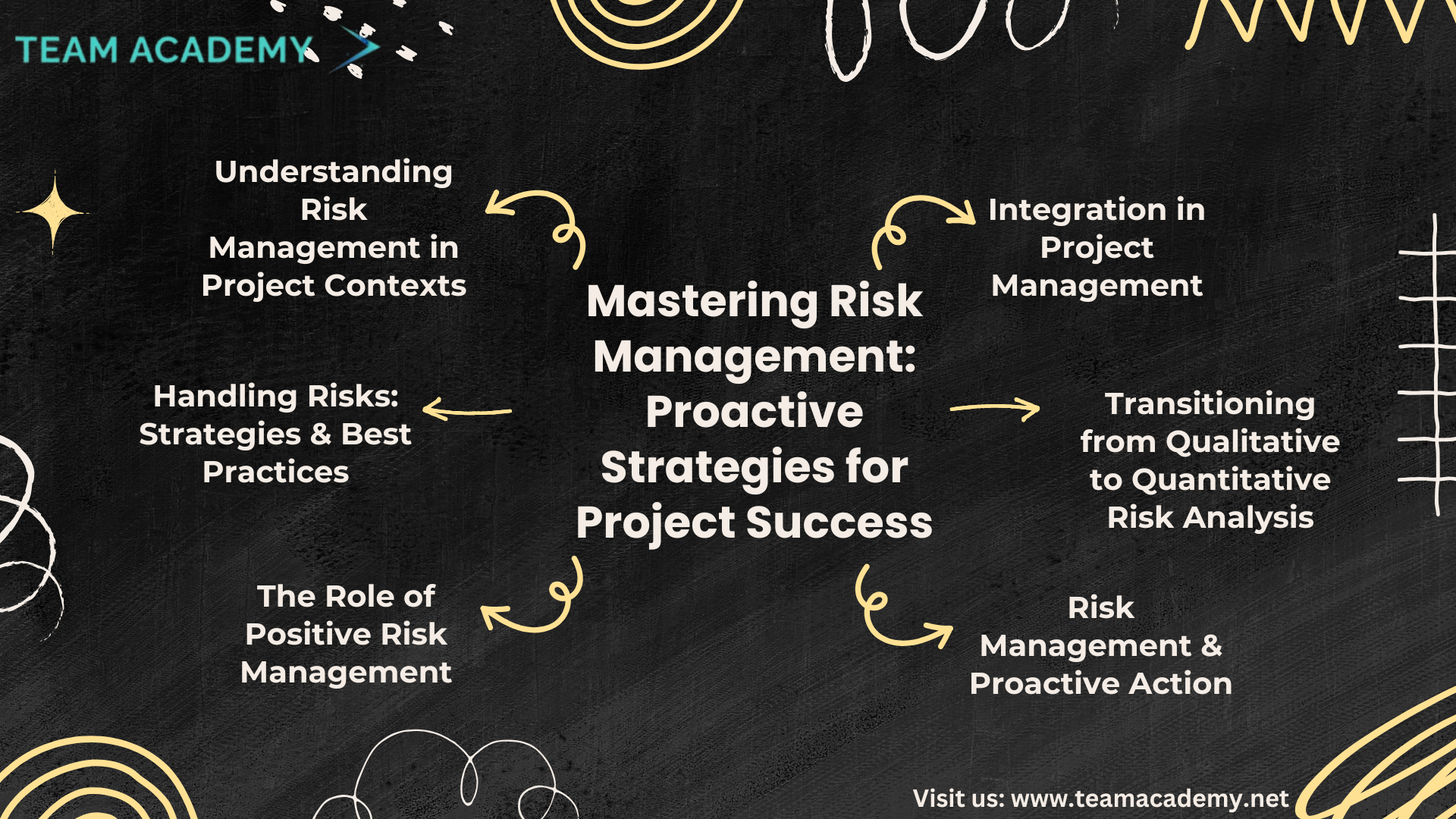
📢 Mastering Risk Management: Proactive Strategies for Project Success
Risk management is an essential component of project success, ensuring that uncertainties are identified, analyzed, and addressed before they escalate into major issues. Our latest training session explored risk management strategies, the importance of proactive decision-making, and the role of collaboration in managing project risks effectively. 🚀📊
🔍 Understanding Risk Management in Project Contexts
Successful projects require structured risk management to mitigate potential challenges.
The key steps in risk management include:
Ø Identification – Recognizing potential risks early 🔎
Ø Analysis – Evaluating risks using qualitative and quantitative methods 📊
Ø Prioritization – Focusing on the most significant risks 🎯
Ø Planning & Treatment – Developing response strategies 🛠️
Ø Monitoring & Communication – Continuously assessing risks and keeping stakeholders informed 🔄
The session emphasized that qualitative risk analysis helps prioritize risks based on impact and urgency, while quantitative analysis assigns numerical values for better decision-making. Understanding the project scope is crucial when identifying and managing risks. 📈
⚖️ Handling Risks: Strategies & Best Practices
Managing risks effectively requires choosing the right response strategy. The team discussed:
àMitigation – Reducing risk probability or impact ✅
àAvoidance – Eliminating risks entirely 🚫
àTransferring – Shifting risk responsibility (e.g., insurance) 🔄
àEscalation – Seeking intervention from senior leadership 📢
àAcceptance – Recognizing and preparing for inevitable risks 🏗️
Sometimes, risk management is not about eliminating risks but about developing patience and resilience in handling them. Strategic acceptance of certain risks can prevent overreaction and unnecessary resource allocation. 💡
🔄 The Role of Positive Risk Management
Risk isn’t always negative. Positive risk management involves capitalizing on opportunities that arise from uncertainty. Key strategies include:
· Exploiting opportunities– Leveraging risks for growth 📈
· Enhancing situations – Strengthening projects through proactive actions 💪
· Acting on identified problems– Addressing known issues before they escalate ⚡
· Building resilience – Adapting to uncertainties with a flexible mindset 🔄
The discussion included real-world analogies, such as how decision-making in uncertain situations—like a frog deciding whether to jump in a rainstorm—can influence project outcomes. 🌧️🐸
🛠️ Risk Management & Proactive Action
The session reinforced the importance of taking action rather than just documenting risks.
Key takeaways:
✔️Treat risks effectively – Implement solutions, not just record issues 📝
✔️ Monitor risk effectiveness – Evaluate responses continuously 🔍
✔️ Adapt alternative plans – Be ready for emerging secondary risks 🔄
✔️ Communicate risks to stakeholders – Keep teams aligned 📢
A proactive approach ensures that risks do not just get recorded but are actively addressed to prevent project disruptions. 🚀
📊 Transitioning from Qualitative to Quantitative Risk Analysis
Collaboration plays a crucial role in risk management. The process includes:
àIdentifying & prioritizing risks – Determining which risks require deeper analysis 🔎
à Quantifying risks – Assigning cost and schedule impacts 📉
à Conducting detailed analysis – Focusing on high-priority risks 📊
àCollaborating with teams– Ensuring all perspectives are considered 🤝
This structured approach helps project managers make data-driven decisions and allocate resources efficiently. 📈
🌐 Integration in Project Management
A successful project requires seamless integration of people, processes, and products.
Key insights included:
✔️ Project managers are accountable but not directly responsible for every task 🎯
✔️ Collaboration is key to managing multiple project elements 🤝
✔️ Predictive vs. Agile project management – Balancing structured and flexible approaches 🔄
✔️ Handling client interactions & changes effectively 🔄
The session wrapped up with an announcement of a three-week review period, allowing students to revisit completed modules covering 60% of the course material. 🏆
🚀 Elevate Your Risk Management Skills!
Mastering risk management is essential for project managers, business leaders, and professionals handling complex projects. Learn how to identify, analyze, and mitigate risks with confidence!
👉🏻 Enroll now!