🚀 Agile Methodologies: From Scrum to Lean for High-Performing Teams
🌟 Introduction
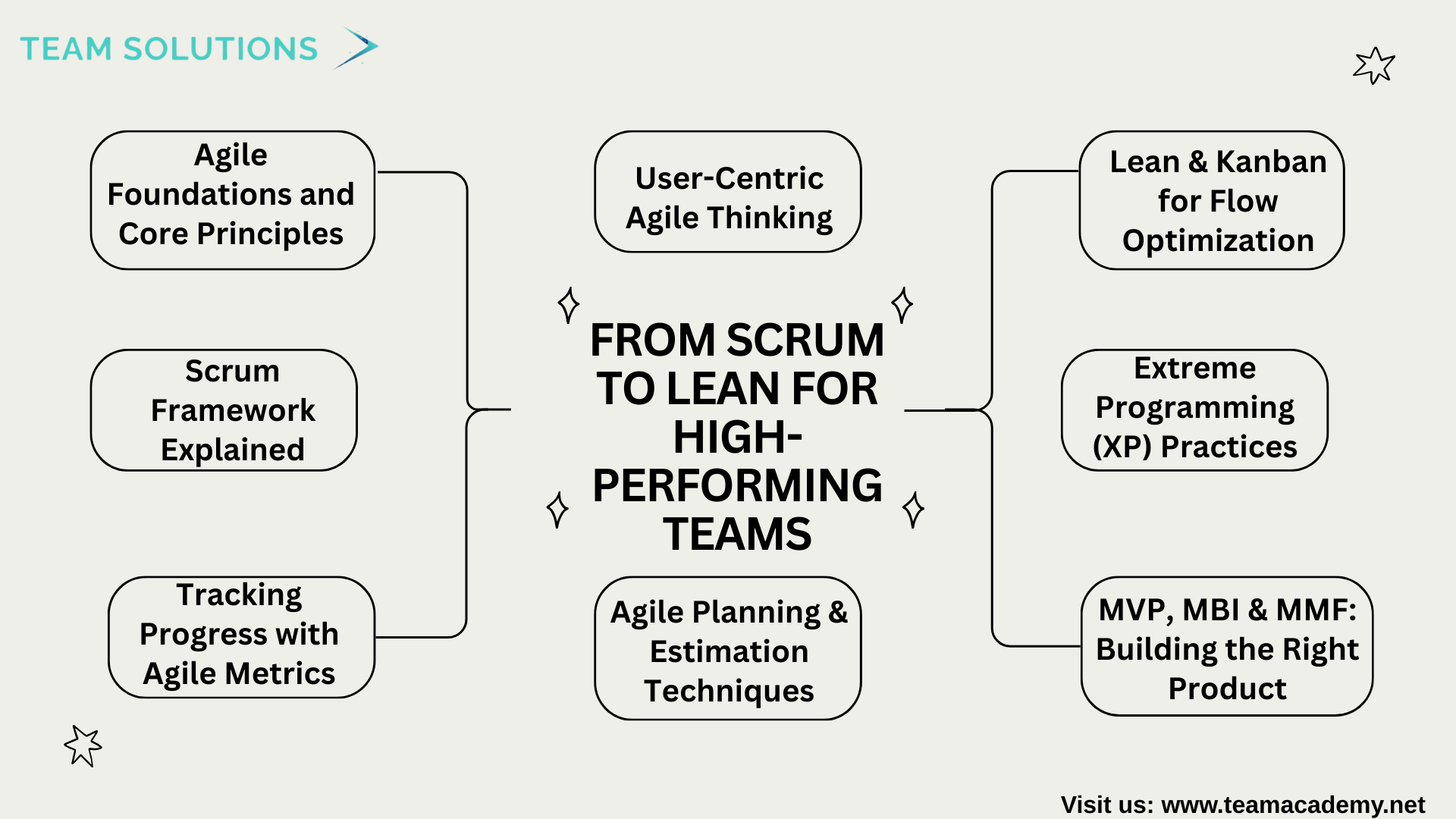
Agile project management has become a cornerstone for delivering value in fast-changing environments. This comprehensive training session offered a deep dive into Agile methodologies, covering Scrum, Extreme Programming (XP), Lean, and Kanban, while focusing on practical techniques that enhance collaboration, transparency, and continuous improvement.
🔁 Agile Foundations and Core Principles
The session began with a strong foundation in Agile values and principles, emphasizing:
🤝 Collaboration over rigid processes
🔍 Transparency through visual tracking
🔄 Continuous feedback and improvement
🎯 Delivering real business value early and often
Participants explored how Agile adapts to change while maintaining focus on customer needs and outcomes.
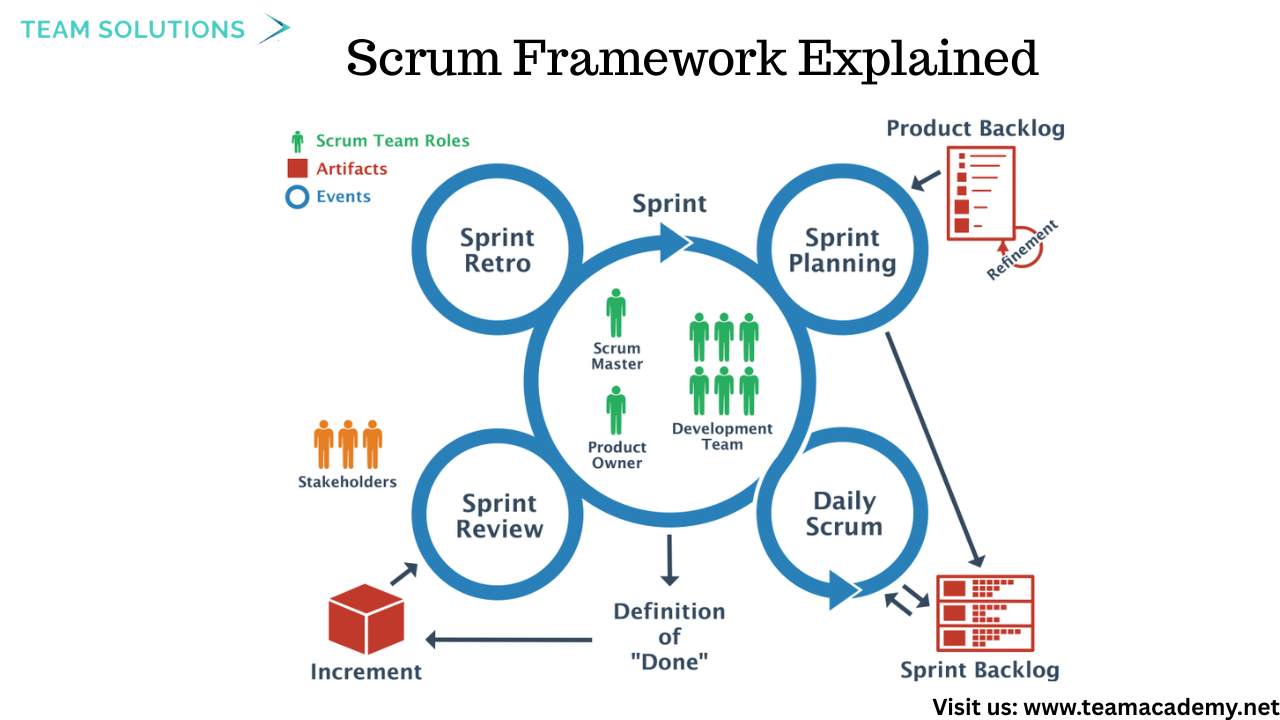
🧭 Scrum Framework Explained
A detailed walkthrough of Scrum fundamentals covered:
👥 Scrum Roles
Product Owner – Prioritizes the product backlog based on business value
Development Team – Self-organized, cross-functional professionals delivering increments
Scrum Master – Servant leader who removes impediments and supports the team
🗂 Scrum Artifacts
Product Backlog
Sprint Backlog
Product Increment
🔄 Scrum Ceremonies
Sprint Planning
Daily Stand-up (15 minutes ⏱️)
Sprint Review
Sprint Retrospective
Each ceremony was explained with real-world relevance and exam-focused clarity.
📈 Tracking Progress with Agile Metrics
The training emphasized data-driven decision-making using Agile metrics such as:
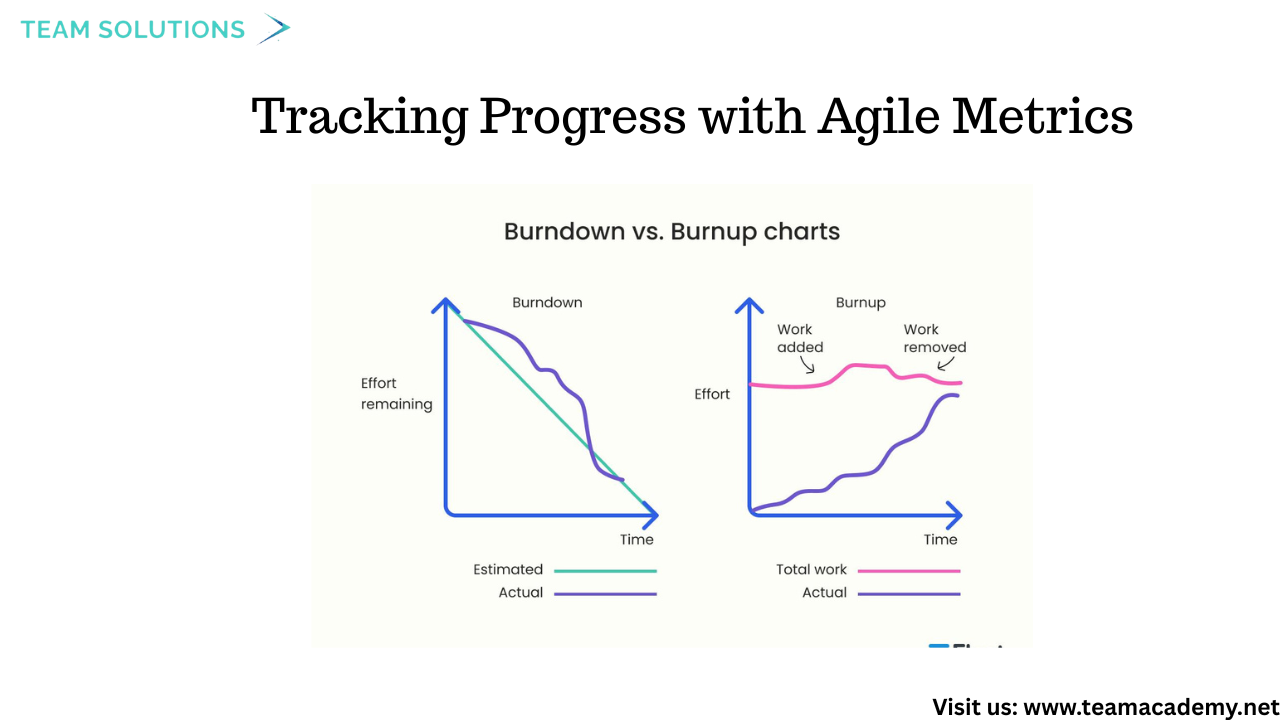
📉 Burn-down Charts – Track remaining work
📈 Burn-up Charts – Show completed work against scope
⚡ Velocity – Measures team capacity per sprint
Participants learned how to interpret these charts to assess whether teams are ahead, behind, or on track.
🧠 Agile Planning & Estimation Techniques
Multiple estimation and prioritization methods were explored, including:
🃏 Planning Poker
📊 Relative sizing with story points
🧮 Wideband Delphi & Affinity Estimation
🔢 100-point method
🎯 MoSCoW prioritization
📦 Kano Model
These techniques help teams align effort with value and manage uncertainty effectively.
🧪 MVP, MBI & MMF: Building the Right Product
A key highlight was understanding how to deliver value early through:
MVP (Minimum Viable Product)
MBI (Minimum Business Increment)
MMF (Minimum Marketable Feature)
These concepts ensure teams validate ideas quickly and avoid overbuilding solutions.
🛠 Extreme Programming (XP) Practices
The session also explored XP principles, including:
👥 Pair programming
🧪 Continuous testing
🔄 TCR (Test–Code–Refactor)
🔗 Continuous integration
🧠 Generalist (T-shaped) team members
XP was positioned as a highly disciplined Agile approach focused on technical excellence.
🧱 Lean & Kanban for Flow Optimization
Lean principles were introduced with a focus on:
🗺 Value Stream Mapping
🚫 Eliminating waste
👀 Visualizing workflow
⛔ Limiting Work in Progress (WIP)
Kanban was highlighted as a practical method for improving flow and predictability without fixed iterations.
🏢 Team Spaces & Communication
The importance of team environments was emphasized, including:
Dedicated team spaces (“caves”) 🕳
Common collaboration areas
Osmotic communication (learning through proximity)
Visual tools like information radiators were shown to improve awareness and transparency.
🎯 User-Centric Agile Thinking
Participants explored techniques to better understand users, such as:
👤 Personas
🧩 User stories
🧪 A/B testing
📊 Net Promoter Score (NPS)
Defect management and “escape defects” were also discussed to reinforce quality-first thinking.
📌 Key Takeaways
✔ Agile is about mindset, not just frameworks
✔ Deliver value early and continuously
✔ Use metrics to guide decisions, not punish teams
✔ Strong collaboration drives successful outcomes
✔ Understanding these concepts is critical for PMP and Agile exams
🚀 What’s Next?
Participants were encouraged to:
Review shared learning materials 📚
Provide feedback 📝
Prepare for upcoming modules focused on deeper Agile application
👉 Join our Free Demo Class
👉 Enroll in our Project Management Programs to master predictive, Agile, and hybrid approaches.
👉 Explore now to deepen your skills and stay ahead in your career